
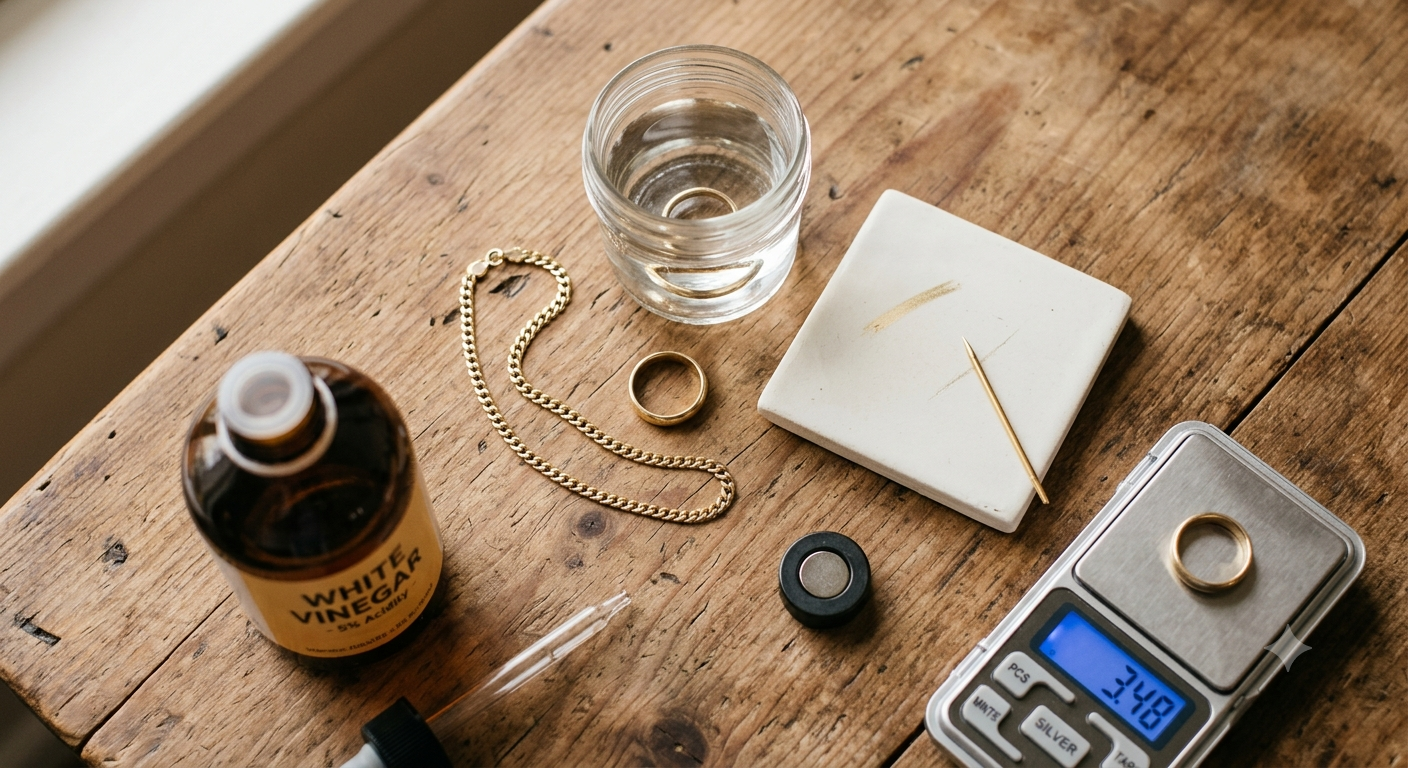
Gold has always been more than just a metal — it’s a symbol of wealth, tradition, and security. Whether you inherited a piece of jewelry, bought gold from a local jeweler, or received it as a gift, one question almost always comes to mind: is this gold real, and how pure is it?
Professional gold testing machines (like XRF analyzers) are accurate, but they’re expensive and not something the average person has lying around at home. The good news is that you don’t need fancy equipment to get a reasonably good idea of your gold’s purity. With a few household items, some patience, and careful observation, you can test gold purity at home without a machine.
This guide walks you through the most reliable manual methods, explains what they tell you, and highlights their limitations so you know when it’s time to visit a professional.
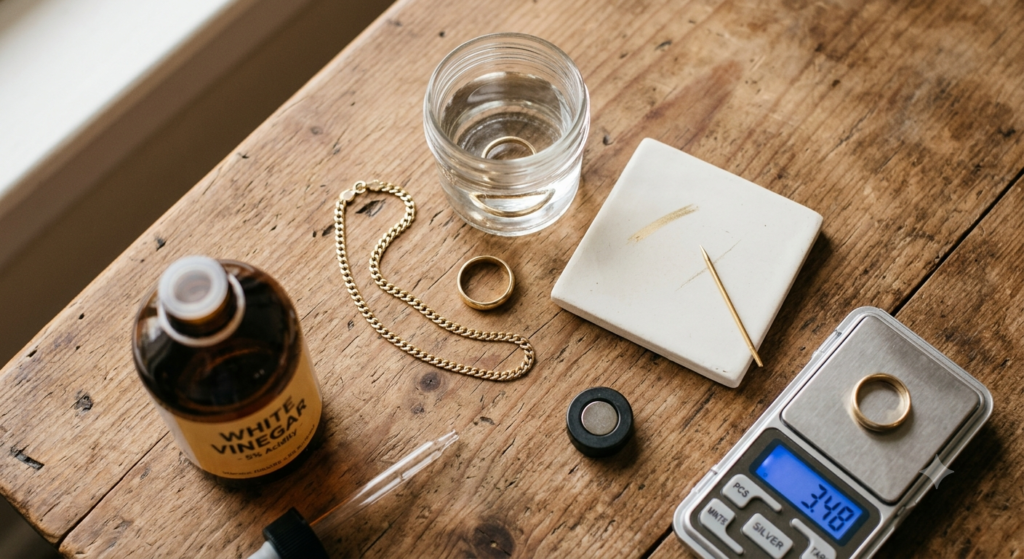
Why Gold Purity Matters
Before diving into the testing methods, it helps to understand what “purity” actually means. Gold purity is measured in karats (K), with 24K representing 100% pure gold. Since pure gold is very soft, jewelers mix it with other metals like copper, silver, or zinc to make it more durable. Common purity levels include:
- 24K – 99.9% pure gold (very soft, rarely used in everyday jewelry)
- 22K – about 91.6% pure gold
- 18K – about 75% pure gold
- 14K – about 58.5% pure gold
- 10K – about 41.7% pure gold
Knowing the purity of your gold matters for several reasons: it affects resale value, helps you avoid being overcharged, and protects you from counterfeit or heavily diluted gold being passed off as high-karat jewelry.
Method 1: The Visual Inspection Test
The simplest test costs nothing and takes seconds. Real gold jewelry is almost always stamped with a hallmark indicating its karat value — look for markings like “24K,” “22K,” “18K,” “750” (for 18K), “916” (for 22K), or “999” (for 24K). These stamps are usually found on the clasp, inner band, or an inconspicuous edge of the piece.
While this isn’t foolproof — stamps can be faked — a missing or oddly placed stamp is often a red flag. Also examine the item closely for discoloration, especially at edges or areas that get more friction, like ring bands. If you notice a different color (silver or copper tones) peeking through the gold surface, this may indicate gold plating over a base metal rather than solid gold.
Method 2: The Magnet Test
Gold is not magnetic, which makes this one of the easiest tests to perform. All you need is a strong magnet (a neodymium magnet works best, though a standard fridge magnet can work in a pinch).
Simply bring the magnet close to your gold item. If it’s strongly attracted to the magnet, it’s very likely not pure gold — it may contain iron or other magnetic metals, or the item could be entirely fake.
However, be cautious: this test only rules out heavily adulterated or fake pieces. Many counterfeiters know about this test and use non-magnetic metals like brass or certain gold alloys, which will pass the magnet test without actually being real gold. So a “pass” doesn’t guarantee purity — it only tells you the item isn’t obviously fake.
Method 3: The Float Test (Density Test)
Pure gold is a dense metal, denser than most metals used to fake or dilute it. This makes water density testing a reasonably reliable at-home method.
Here’s how to do it:
- Fill a glass with water.
- Gently drop your gold item into the water.
- Observe how it behaves.
Real, solid gold will sink quickly to the bottom due to its high density. If your item floats, hovers in the middle of the glass, or sinks very slowly, it likely contains lower-purity gold or is plated rather than solid.
This test is easy to perform but isn’t precise enough to tell you the exact karat — it simply helps confirm whether the item is likely to be genuine, dense gold or a lighter imitation.
Method 4: The Skin Test
This method relies on a quirky but genuinely useful chemical reaction. Pure gold does not react with skin oils or oxidize, so it typically won’t leave any mark or discoloration on your skin.
To try it, rub the gold item gently between your fingers or against the inside of your wrist for about a minute. If a black or greenish smudge appears on your skin, the item likely contains base metals like copper or nickel mixed in — and the lower the purity, the more pronounced this discoloration tends to be.
Keep in mind that this test can be influenced by your skin’s natural pH and moisture level, so results can vary from person to person. It works best as a supporting test alongside others, not as a standalone verdict.
Method 5: The Vinegar Test
White vinegar’s mild acidity makes it a handy household reagent for a basic purity check.
Steps:
- Place a few drops of white vinegar directly onto the gold item.
- Wait for about 15 minutes.
- Rinse with water and observe the surface.
If the gold changes color — turning darker, greenish, or showing any discoloration — this suggests the presence of non-gold metals, meaning the item is either low-karat gold or gold-plated rather than solid. Genuine high-purity gold will show no reaction and will retain its original shine.
This test is inexpensive and simple, but it should be done carefully, especially with delicate or antique jewelry, since repeated exposure to acidic substances can damage certain finishes or gemstone settings.
Method 6: The Ceramic (Unglazed Porcelain) Scratch Test
This is a classic jeweler’s trick that you can replicate at home using an unglazed ceramic tile — the back of a bathroom tile or a piece of unglazed pottery works well.
Steps:
- Firmly scratch your gold item against the rough, unglazed surface of the ceramic.
- Examine the streak of color left behind.
If the streak is a smooth, golden-yellow color, that’s a positive sign of genuine gold. If the mark is black or a different color entirely, the item is likely not pure gold, or is a low-karat alloy or a plated piece.
This test does leave a small mark on the item’s surface, so it’s best used on a discreet spot, and it’s generally not recommended for very valuable or antique pieces where you want to avoid any surface alteration.
Method 7: Weight and Size Comparison
If you have access to a reasonably accurate kitchen or jewelry scale, you can compare the weight of your item to what genuine gold of that size and shape should weigh. Gold is notably heavier than most metals used in counterfeits, so an item that feels unusually light for its size may be a red flag.
This method requires some reference knowledge of gold’s density (19.3 grams per cubic centimeter for pure gold) and is more useful as a supporting clue than a definitive test, since exact calculations require knowing the item’s precise volume.
Combining Tests for Better Accuracy
No single home test is 100% conclusive on its own. Counterfeiters have become increasingly sophisticated, and some fake gold can pass one or two basic tests. For the most reliable results without professional equipment, it’s best to combine multiple methods:
- Start with a visual inspection for hallmarks and discoloration.
- Follow with the magnet test to rule out obviously magnetic fakes.
- Use the float test to check density.
- Confirm with either the vinegar test or skin test for chemical reaction clues.
If your item passes most or all of these tests consistently, it’s a strong indication that you have genuine, reasonably pure gold. If results are mixed or inconclusive, that’s your cue to seek professional verification.
When to See a Professional
Home tests are great for quick peace of mind, but they have real limitations. They can’t tell you the exact karat value, and some can even be fooled by cleverly made fakes or specially coated base metals. If you’re dealing with a high-value item, an inheritance, or you’re planning to sell or insure the piece, it’s worth getting it professionally tested using:
- XRF (X-ray fluorescence) analysis — non-destructive and highly accurate
- Acid testing by a licensed jeweler — using graduated acid solutions to determine exact karat
- Fire assay — the most accurate method, though it’s destructive and typically used only for larger quantities like bars or coins
Professional testing is especially important before any major financial decision, such as selling gold, taking out a loan against it, or including it as part of an investment portfolio.
Final Thoughts
Testing gold purity at home without a machine is entirely possible using simple household items — vinegar, water, a magnet, ceramic tile, and a bit of careful observation. While these methods won’t give you a lab-certified karat rating, they’re excellent first-line checks that can help you spot obvious fakes, avoid being scammed, and decide when it’s worth investing in professional verification.
Remember, the goal of home testing isn’t to replace expert appraisal but to give you enough information to make informed decisions — whether that’s negotiating a purchase price, deciding whether to get a certificate, or simply satisfying your curiosity about a piece you already own. When in doubt, especially with valuable or sentimental items, a quick trip to a certified jeweler or assayer is always the safest final step.